

Collagen peptides, essential for good health
Naturally produced by the body, collagen is found in many parts of our body. Bones, tendons, ligaments, skin, connective tissue, hair and nails: it is one of their essential components. It is therefore an excellent ally for healthy joints, regardless of age, and can even help maintain optimal muscle mass during a diet. The body tends to produce less collagen with age. Its production appears to decline from the age of thirty onwards. This is when wrinkles and fine lines begin to appear, as well as the first joint problems. Is this inevitable? No. It is possible to compensate for this decline in collagen by turning to supplements based on collagen hydrolysate and collagen peptides. Focus on proteins that are essential for the proper functioning of the body, or how to benefit from marine collagen and its famous peptides.
Collagen: what is it?
Collagen belongs to the family of proteins known as structural proteins. This means that it is composed of fibres that contain fibroblasts. This protein is found in most parts of the human body. It is estimated that it alone accounts for approximately 6% of a man’s total weight.
It is found in about 65% of fibrous proteins. It is present in cartilage, bones, lungs, muscles, vessel walls, and also in the dermis. Impossible to stretch, this protein is particularly resistant to the effects of traction. It is from this characteristic that it derives its name. The word “kolla” is the Greek word for glue.
In dietary supplements, this protein comes in various forms, which we will discuss below.
Hydrolysed marine collagen: the king of dietary supplements
A complex protein composed of numerous amino acid chains that the human body naturally produces from proteins ingested in the diet, collagen can also be extracted from the tissues of certain animals and packaged in the form of dietary supplements that are easily absorbed and highly effective.
The collagen contained in this type of supplement is known as hydrolysed collagen. A chemical process breaks down this protein into a set of protein sub-fractions commonly known as collagen peptides. It is these peptides that make the preparation perfectly digestible for the human body. Their distinctive feature is that they are completely neutral. Odourless and tasteless, they mix easily in liquids, whether hot or cold.
How much hydrolysed collagen should you consume to maintain muscle mass while dieting? It all depends, of course, on your body type and base weight, but we can say that a dose of 10 grams per day is generally sufficient. To improve absorption, it may be a good idea to combine it with vitamin C.
If you want to improve the condition of your skin, 5 grams of hydrolysed collagen is a good start. The collagen peptides contained in this type of preparation are most effective when combined with hyaluronic acid, another protein known for its anti-ageing properties in the epidermis.
Hydrolysis, a complex phenomenon that is the secret to the effectiveness of collagen peptides
Hydrolysis is used to transform connective tissue, often derived from sea fish (which is why it is referred to as marine collagen), into hydrolysed collagen rich in collagen peptides. This process breaks down the tissue using water. In this way, the selected tissue is broken down into a set of very small molecules that are easily absorbed by the digestive system.
The long chains of amino acids in natural collagen are transformed into short chains called collagen peptides, which have remarkable bioavailability.
During digestion, collagen peptides are sent to the various tissues where they are needed, and the cells transform them into small collagen helices that can be used immediately. This mechanism is the secret behind the remarkable effectiveness of hydrolysed collagen for general health.
The different types of collagen peptides
The human body contains more than 40 types of collagen. However, the most common are those known as types I, II and III. We will discuss their specific characteristics below.
Type I collagen: for bones and connective tissue
This collagen is found throughout the human body, with the exception of cartilage tissue. It is one of the major components of the skin and is an essential anti-ageing factor for this organ. What is it used for?
- It limits the effects of skin ageing.
- In combination with hyaluronic acid, it contributes to optimal hydration.
- It increases the firmness of skin tissue.
- It smooths wrinkles by helping to reduce furrows.
Its main component is glycine, a molecule that helps block endotoxins and prevents the onset of inflammation. It also contains proline, another molecule known for its antioxidant properties. It helps fight free radicals and prevent their harmful effects.
Glutamine and creatinine complete the composition of this type I. Thanks to these two molecules, intestinal inflammation is prevented and athletic performance is enhanced.
Consuming type I collagen slows hair loss, thickens hair, makes it more beautiful, reduces the appearance of wrinkles, improves venous circulation, strengthens nails and fortifies all supporting tissues.
Type II collagen, the ally of cartilage
This type of collagen is produced by chondrocytes. It is only found in cartilage. It is what we need if we suffer from joint pain or osteoarthritis.
Type III collagen, the twin of type I collagen
Type III collagen is very similar to type I collagen. This is why they are usually grouped together. It is found in organs such as the lungs, muscle tissue and the lining of the arteries. It is what we need to maintain cardiovascular health.
The health benefits of hydrolysed collagen and collagen peptides
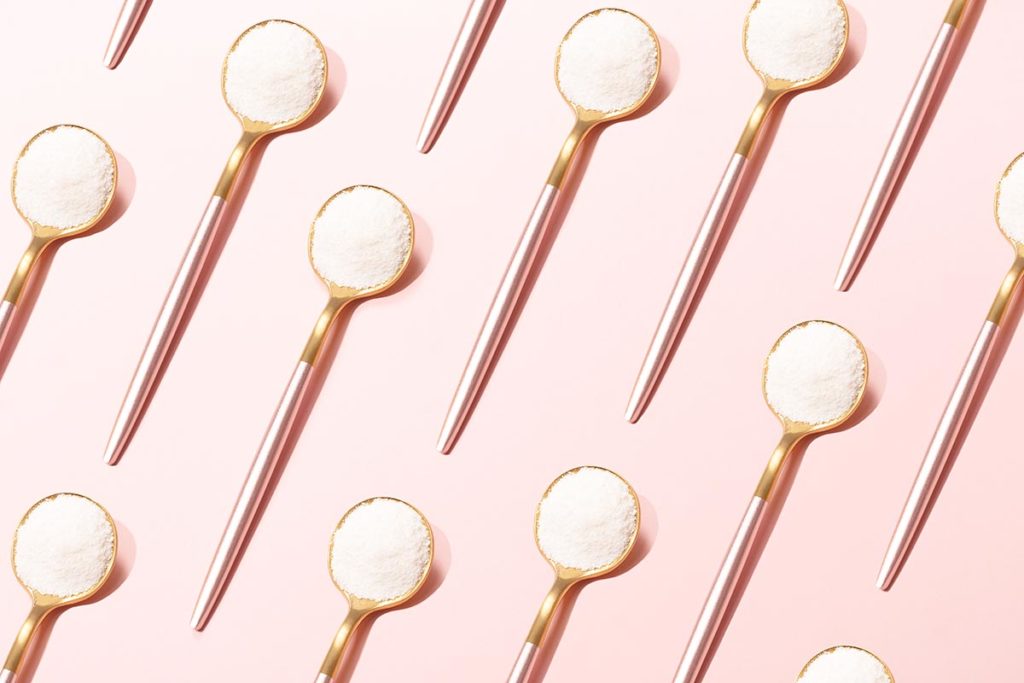
Hydrolysed collagen, rich in collagen peptides, found in dietary supplements, has many health benefits:
- It is essential for maintaining the elasticity and suppleness of the skin. It limits the effects of ageing.
- It soothes inflamed joints by helping tissues to repair themselves.
- It acts as a powerful anti-ageing agent throughout the body and limits the appearance of signs of ageing.
- It helps maintain an optimal intestinal barrier, thereby preventing inflammation linked to poor nutrient absorption.
- It protects blood vessels.
Taken in the form of collagen hydrolysate in dietary supplements, in capsule or powder form, collagen is a powerful ally for good health. It can help athletes who want to boost their performance, new mothers who want to quickly regain their ideal weight without losing muscle mass, and older people who want to maintain healthy joints. Versatile and safe, it is like a fountain of youth.