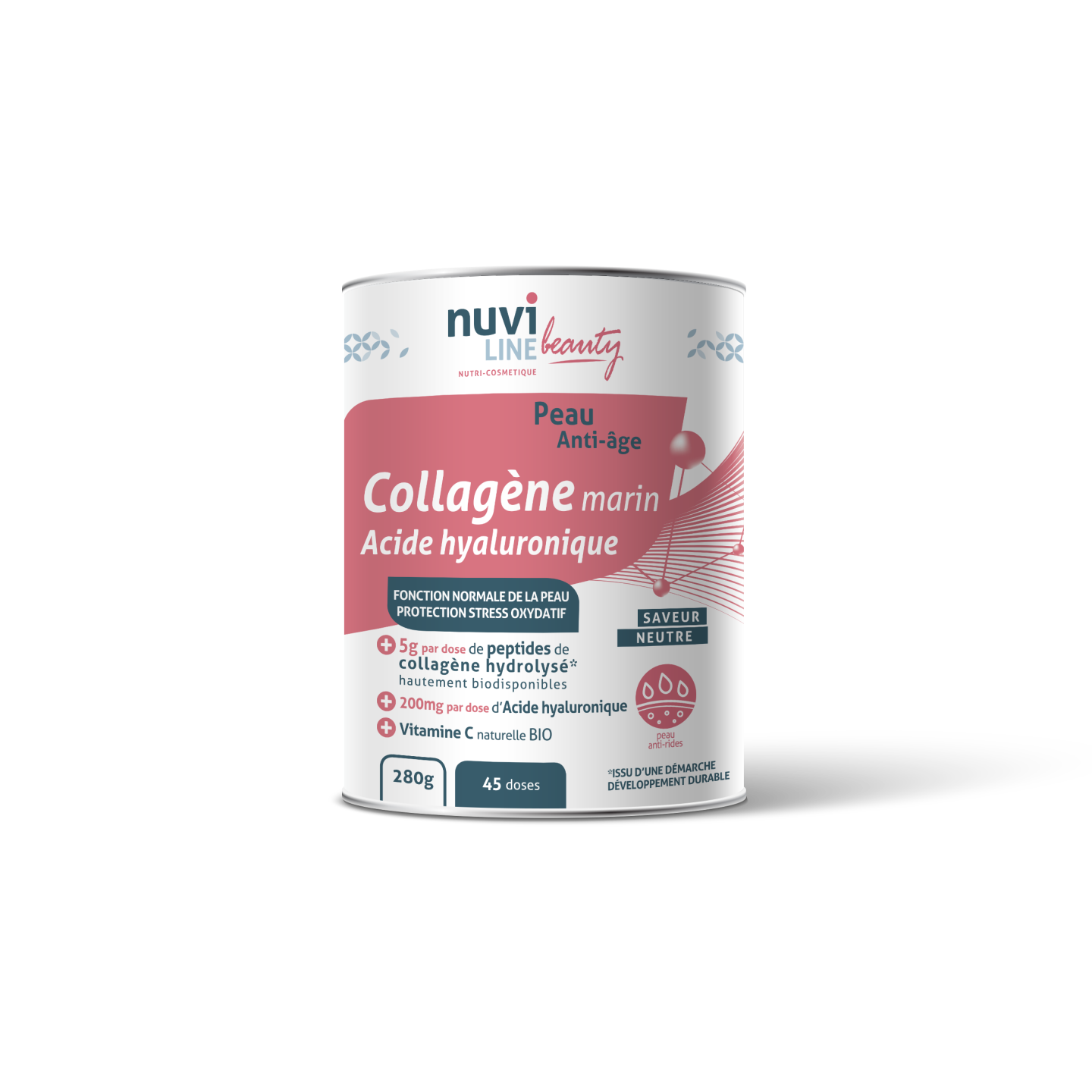
1. MARINE COLLAGEN, A PURE AND NATURAL FUNCTIONAL INGREDIENT
French origin
Fish skin, a hitherto untapped resource, with 7x less carbon impact than bovine collagen!
Collagen was naturally consumed by our ancestors, who fed more on the parts of animals containing the most collagen, such as skin, cartilage and bones. Collagen is compatible with a paleo-friendly diet.
Ithas always been used in Japan, where it is recognised as being particularly biocompatible or bioactive, as well as being highly bioavailable.
- It consists of proteins in the form of hydrolysed peptides (enzymatic hydrolysis) bioactive natural marine collagen from a sustainable development approach (ASC Aquaculture Stewardship Council, BAP Best Aquaculture Practice, and MSC sustainable fishing labels).
- Molecular weight less than 4 kilodaltons (kDa). This is a low molecular weight, optimised for maximum assimilation and improved biological efficacy (bio-active peptides). In comparison, collagen before hydrolysis has a molecular weight of 300 kDa.
- Particularly rich in amino acids - glycine, proline and hydroxyproline - which make up the majority of collagen in connective tissue (cartilage, bone, muscle, skin, gums, etc.).
- Also rich in glutamine , a major constituent of proteins.
- Non-GMO - Fat free - Carbohydrate and sugar free - Preservative free
- No ionisation treatment - No radioactivity
- Rigorous manufacturing standards - Quality in compliance with ISO 9001 - ISO 22000
- Halal certification
- 100% fish origin: no BSE risk for bovine collagen, no bird flu risk for chicken collagen
- The peptide form is derived from natural collagen cut into smaller pieces (enzymatic hydrolysis) and therefore more easily digested
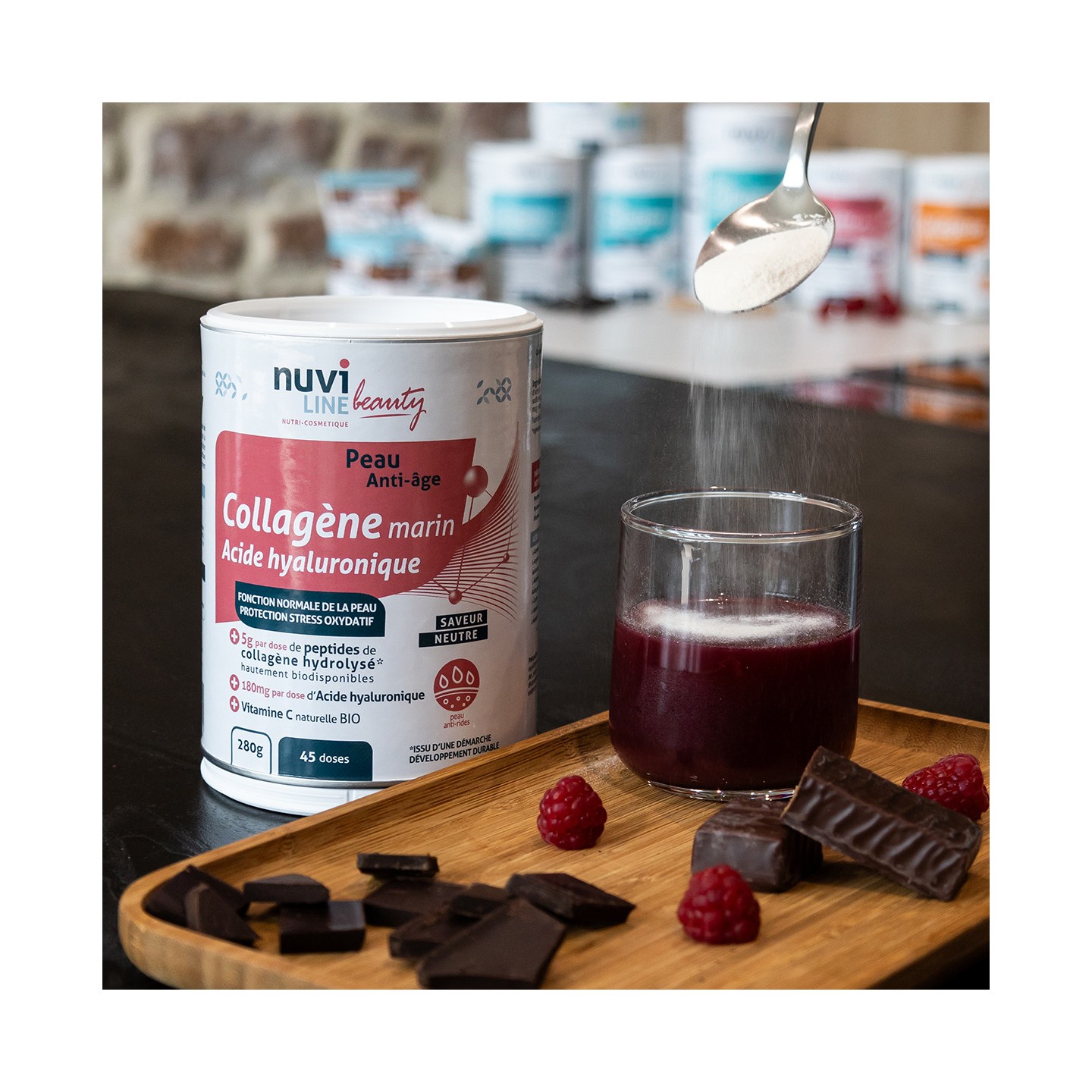
- Neutraltaste, dilute in water, yoghurt or fromage frais.
- AVOID MIXING WITH A PRODUCT THAT IS TOO HOT - AVOID COOKING
- Protein intakes may be insufficient and/or requirements may be increased in the following cases: advancing age (from 35-40 years), sporting activities, etc.
Good to know:
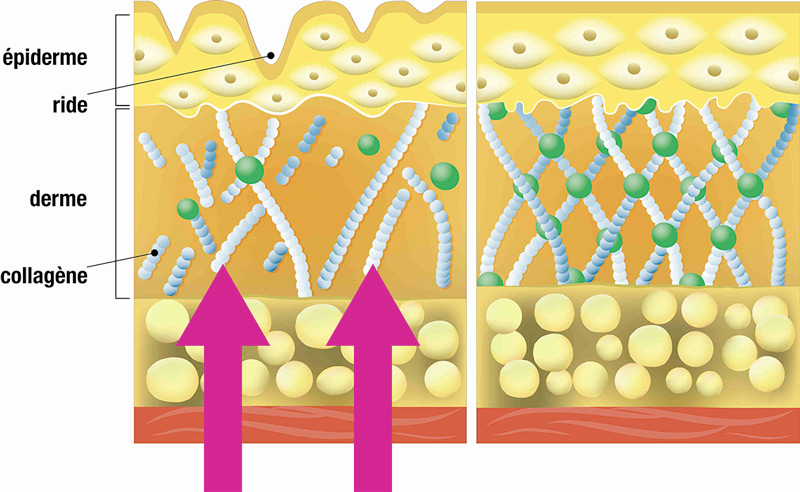
- Collagen is a component naturally present in the body (muscles, skin, bones, tendons, cartilage, etc.) where it plays a major role in support and/or elasticity.
- From the age of 25, collagen production in humans decreases by 1.5% per year.
- By the age of 45, the body produces around 1/3 less collagen.
- Today 's diet - sometimes unbalanced, overly industrial, with a preference for lean meat with no bones or cartilage - tends to consume less external collagen.
It has a nourishing action 'from within': it can therefore be used as a complement to a topical solution (e.g. cosmetic cream) whose effect is necessarily limited when applied to the skin because the skin barrier prevents the absorption of active ingredients considered foreign to the body. On the other hand, when we drink or ingest collagen, most of it is absorbed by the intestinal walls and properly used by the skin.
Roles and functions of collagen in the skin :
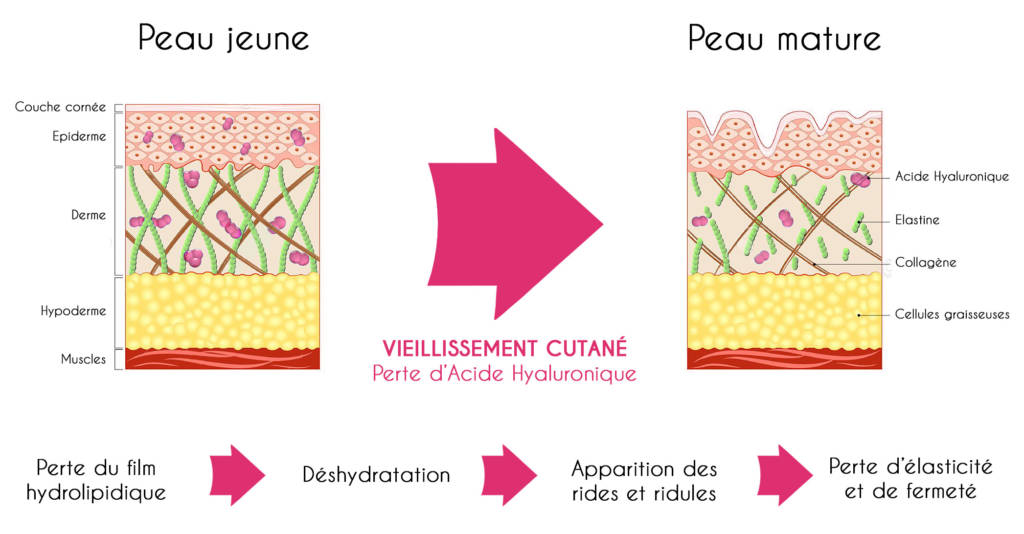
2. HYALURONIC ACID, THE EXPERT COMPONENT FOR "SMOOTHING OUT" DEHYDRATED SKIN
A molecule naturally present in the body and widely distributed in our epithelial and nervous tissues
Capable of retaining more than 1000 times its weight in water. For suppler, plumper skin
The natural quantity of hyaluronic acid diminishes with age, and by the age of 50 we lose half our hyaluronic acid capital.
Appropriate supplementation therefore helps to regenerate the skin:
- High-quality molecule derived from an innovative plant biofermentation process - no impact on nature, no impact on people.
- Offered here with optimised fraction sizes - from 50 to 3000 kDa - specifically adapted for optimal use in the skin: our hyaluronic acid has the advantage of combining the highest degree of absorption while promoting the production of endogenous hyaluronic acid.
- Excellent tolerance
- Suitable both for moisturising young skin and as an anti-ageing treatment for more mature skin
- Proven effectiveness (see studies below)
- The hyaluronic acid we use is: allergen-free, GMO-free, vegan and developed without animal testing.
Good to know - Hyaluronic acid :
- Improves the tone of mature, damaged or specific skins
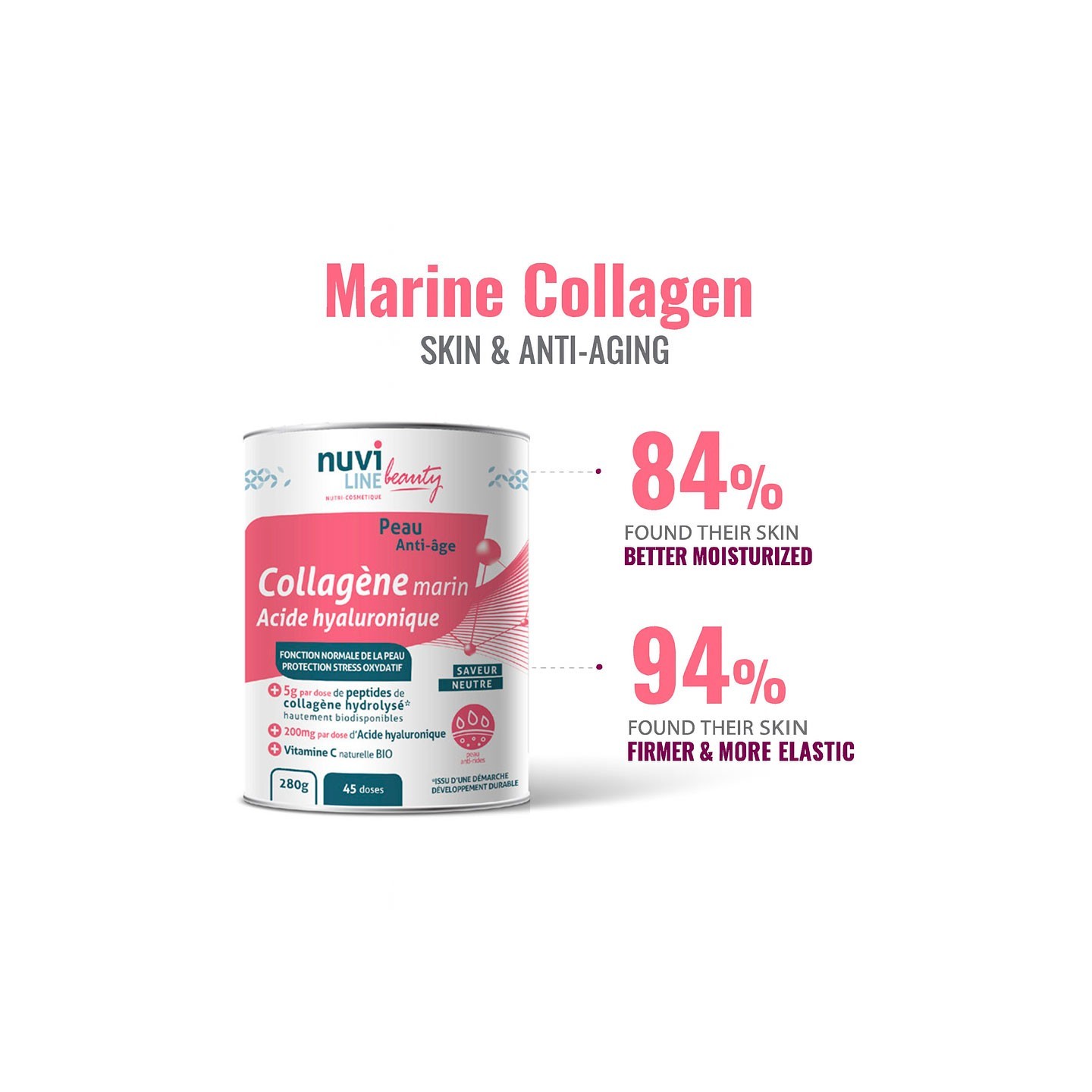
- Improvesskin hydration and elasticity from within
- Reduces the depth and volume of wrinkles
- Improves the synthesis of endogenous hyaluronic acid
Roles and functions of hyaluronic acid in the skin :
3. VITAMIN C
A VITAMIN TO COMBAT FATIGUE AND CELL AGEING LINKED TO OXIDATIVE STRESS
It also plays an important role in the metabolism and normal functioning of various biochemical reactions in the body. Not least in the synthesis of collagen!
Vitamin C (or ascorbic acid) is a major vitamin found in fruit and vegetables. Our bodies do not have the capacity to synthesise it, and food is the only way to obtain the necessary and sufficient supply. It is sensitive to cooking and air. It is therefore important to eat fresh fruit and vegetables quickly to retain all their vitamin C content.
Its main benefits are to reduce fatigue, combat oxidation and cell ageing, and strengthen the immune system.
Here we have selected ORGANIC acerola powder, a fruit that is particularly rich in natural vitamin C.
Its major functions on the SKIN are :
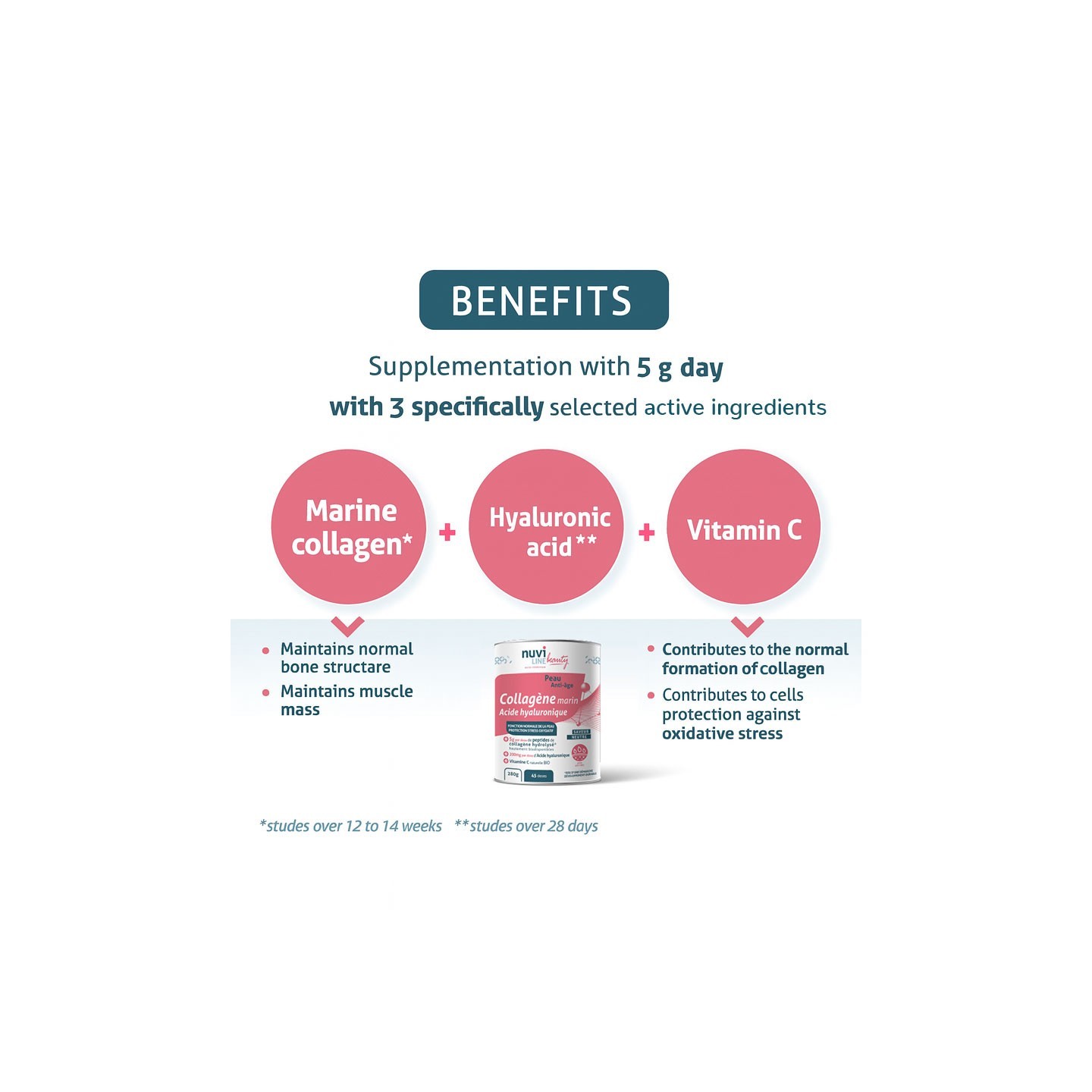
- Contributes to the normal formation of collagen
- Helps protect cells against oxidative stress.
 Jennifer B.


 Free delivery
For orders over €90
Free delivery
For orders over €90
 Secure payment
Visa, Mastercard, Paypal, ApplePay
Secure payment
Visa, Mastercard, Paypal, ApplePay
 Do you have a question?
We're here for you
Do you have a question?
We're here for you