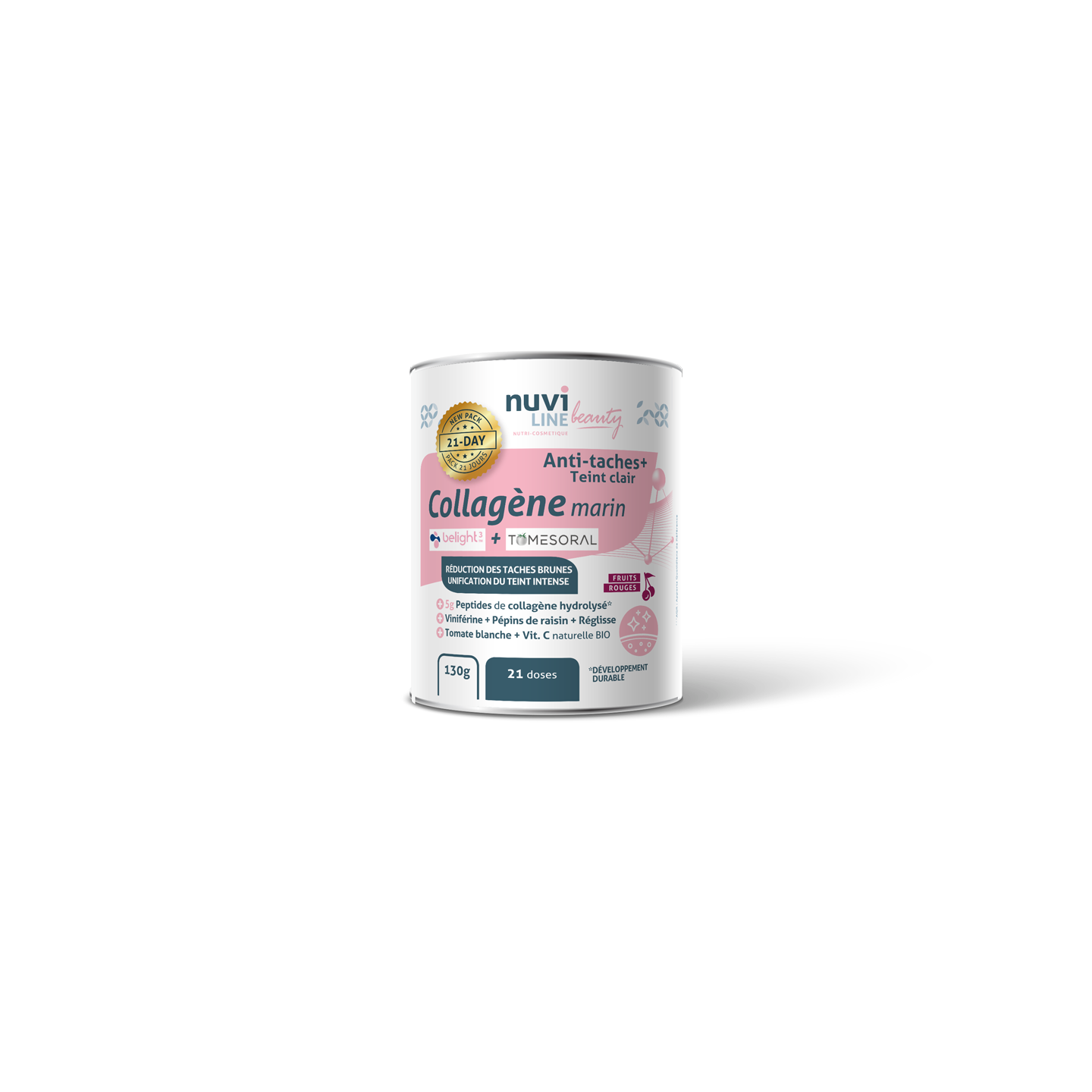
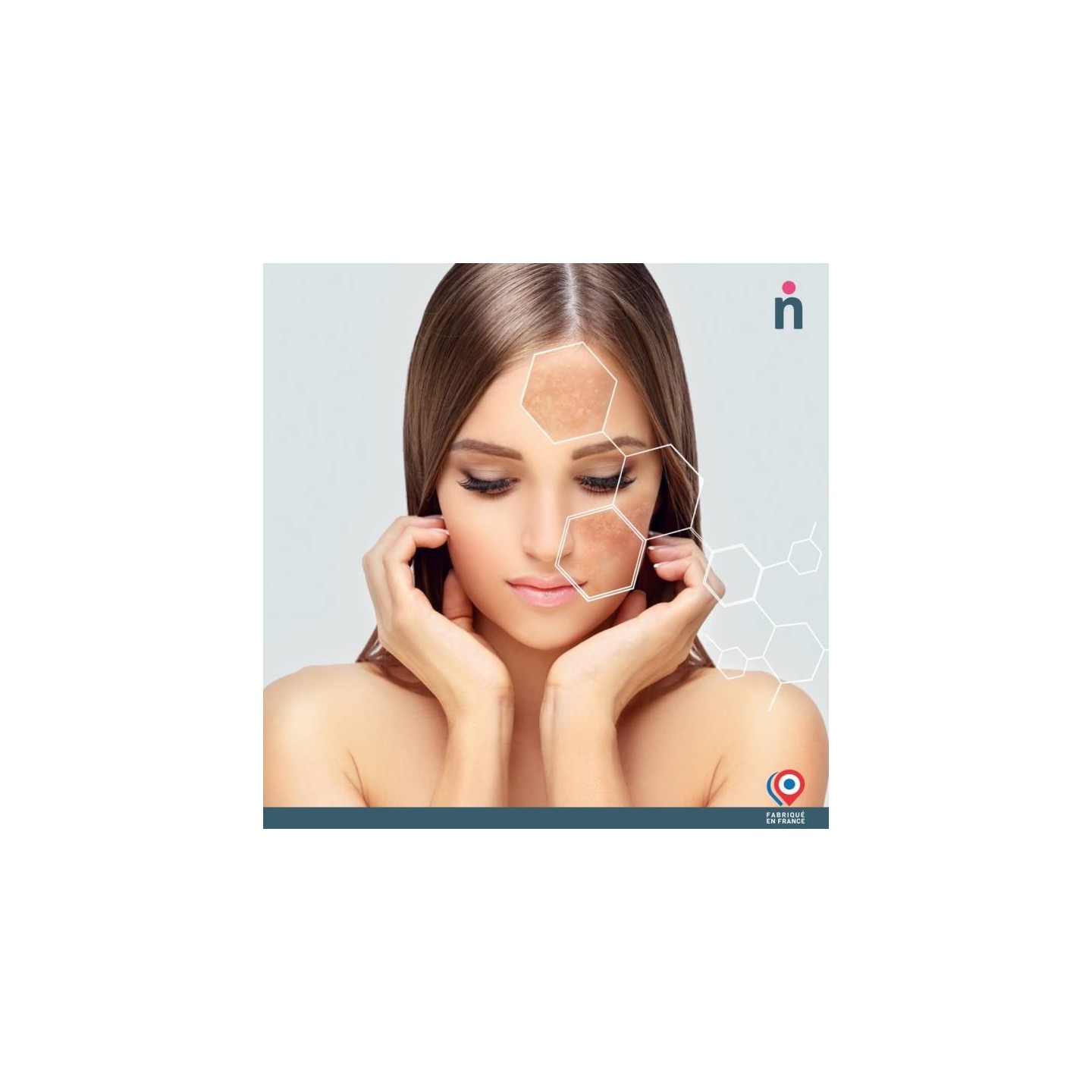
A POWERFUL POWDER FORMULA TO REDUCE DARK SPOTS AND BRIGHTEN THE COMPLEXION
> Regulates melanin production responsible for hyperpigmentation and dark spots
> Contributes to overall skin health... and a beautiful complexion!
1. MARINE COLLAGEN
A PURE AND NATURAL FUNCTIONAL INGREDIENT
Collagen was naturally consumed by our ancestors, who ate more of the parts of animals that contained the most collagen, such as skin, cartilage, and bones. Collagen is compatible with a paleo friendly diet.
Always used in Japan where it is recognized as being particularly biocompatible or bioactive, while also having good bioavailability
- It consists of bioactive hydrolyzed (enzymatically hydrolyzed) peptide proteins from natural marine collagen sourced through sustainable development practices (ASC Aquaculture Stewardship Council, BAP Best Aquaculture Practice, and MSC sustainable fishing labels).
- Molecular weight less than 4 kilodaltons (kDa). This is a low molecular weight, optimized for maximum assimilation and better biological efficiency (bioactive peptides). In comparison, collagen before hydrolysis has a molecular weight of 300 kDa.
- Particularly rich in amino acids - glycine, proline, and hydroxyproline - which make up the majority of collagen in connective tissues (cartilage, bones, muscles, gums, skin...), and also the scalp.
- Also rich in glutamine which is a major component of proteins.
- Non-GMO - Fat-free - No carbohydrates or sugar - No preservatives
- No ionization treatment - No radioactivity
- Strict manufacturing standards - Quality compliant with ISO 9001 - ISO 22000
- Halal Certified
- 100% fish origin: no risk of BSE for bovine collagen or avian flu for chicken collagen
- The peptide form is derived from natural collagen that has been broken down into smaller pieces (enzymatic hydrolysis) and is therefore easier to digest
- Neutral taste and no aftertaste
- AVOID MIXING WITH PRODUCTS THAT ARE TOO HOT - AVOID COOKING
- Protein intake may be insufficient and/or requirements may be increased in the following cases: advanced age (from 35-40 years old), sports practice, etc.
Good to know:
- Collagen is a component naturally present in the body (muscles, bones, tendons, cartilage, skin...) where it plays a major role in providing support and/or elasticity. The amino acids in collagen are also precursors to proteins such as keratin, the main component of hair and nails.
- From the age of 25, collagen production in humans decreases by 1.5% per year.
- By the age of 45, the body produces about 1/3 less collagen.
- Today's diet - sometimes unbalanced, overly industrialized, preference for lean meats without bones or cartilage - tends towards a lower consumption of external collagen.
Studies and scientific evidence:
- A supplement of 5 g/day of bioactive fish collagen peptides was administered for 12 to 14 weeks.
- Significant results were observed after just 6 weeks on various functions
It has a nourishing effect "from within": it can therefore be used as a supplement to a topical solution (e.g., cosmetic cream) whose effect is necessarily limited when applied to the skin because the skin barrier prevents the absorption of active ingredients considered foreign to the body. On the other hand, when collagen is drunk or ingested, most of it is absorbed by the intestinal walls and used correctly to hydrate and nourish the tissues so that they perform better.
Furthermore, the amino acids in collagen peptides are also precursors to keratin, the main protein present in hair.
Roles and functions of collagen in the skin:
2. THE NATURAL MELANIN-REGUL COMPLEX
A PLANT-BASED SYNERGY FOR A NEW BEAUTY RITUAL TO COMBAT DARK SPOTS, EVEN OUT SKIN TONE, AND BRIGHTEN THE COMPLEXION
What are age spots or sun spots?
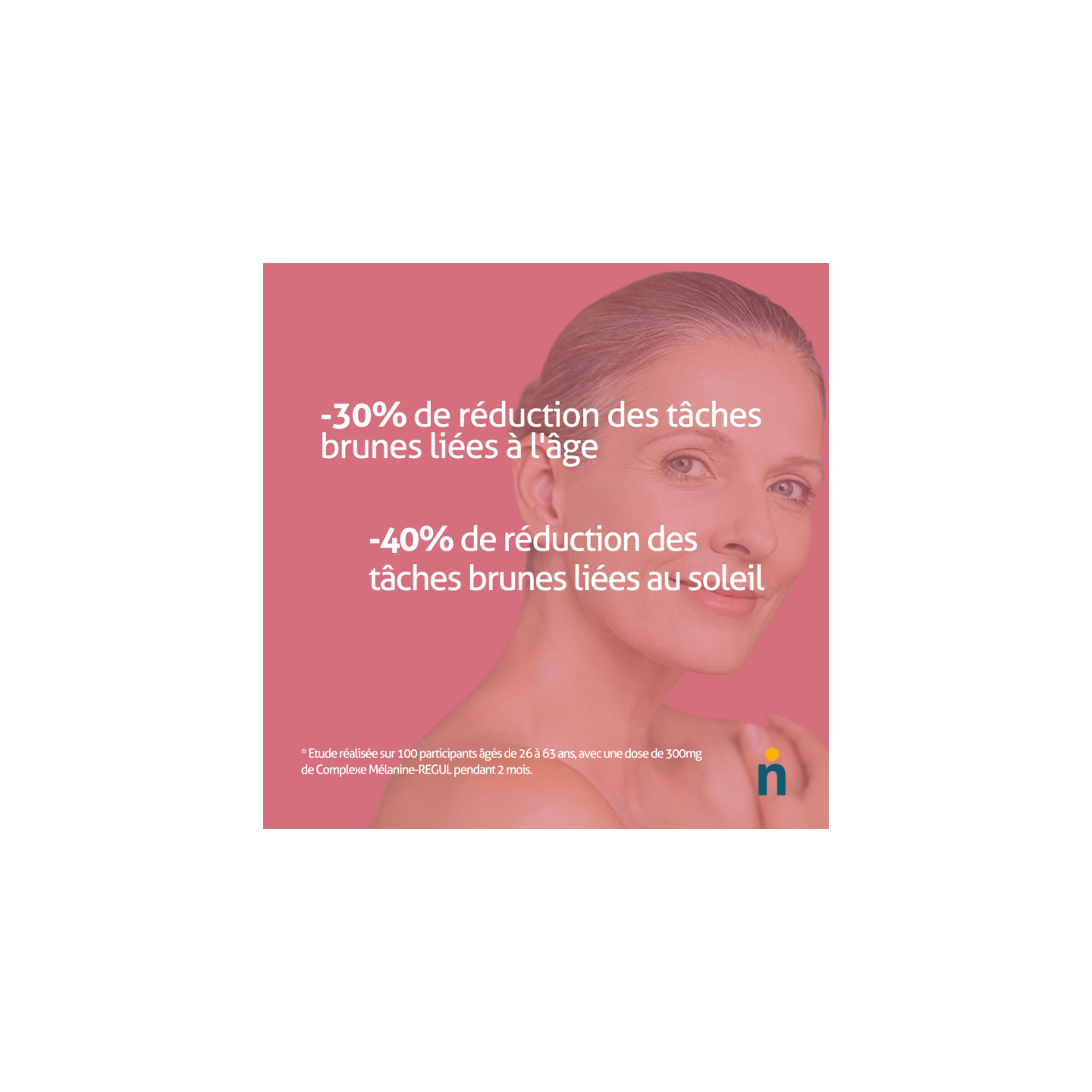
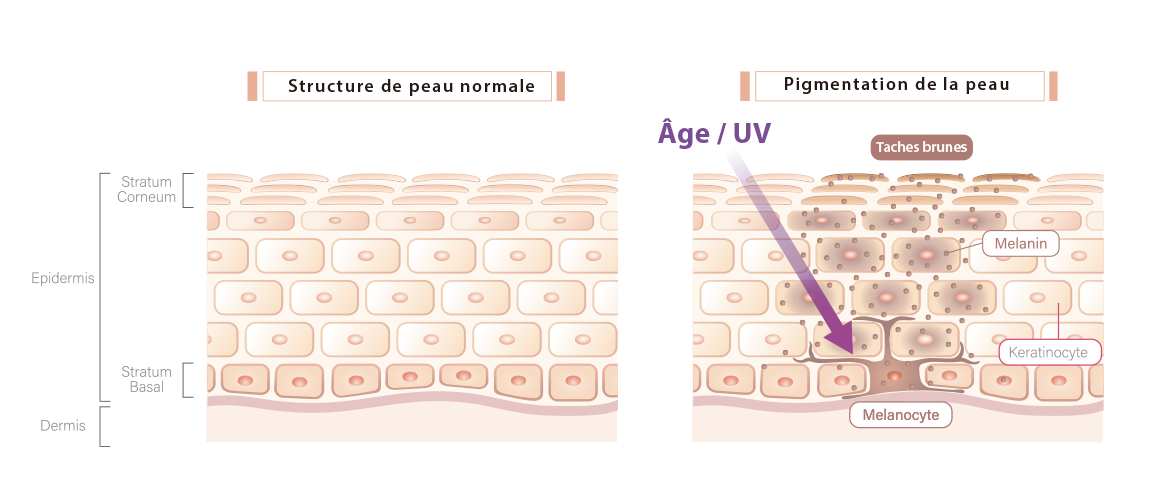
Age spots or sun spots are often referred to as liver spots, solar lentigines, or solar lentigo. These brown spots usually appear on sun-exposed skin, such as the face, hands, shoulders, and arms. They are associated with two main factors:
-
Skin aging: As we age, our skin undergoes various changes, including decreased cell regeneration, loss of collagen and elastin, and alterations in the production of melanin, the pigment responsible for skin color. Pigment cells called melanocytes may become more active or produce melanin irregularly. These changes can lead to uneven pigmentation accumulation, manifesting as brown spots.
-
Sun exposure: The sun's ultraviolet (UV) rays are a major factor contributing to the formation of brown spots. Prolonged UV exposure can stimulate melanin production in certain areas of the skin, leading to excessive pigmentation. Sun spots are often the result of repeated exposure to the sun without adequate protection.
It is important to note that although these spots are not usually medically dangerous, they can be cosmetically undesirable. However, medical supervision is necessary if they change.
Mechanism of action
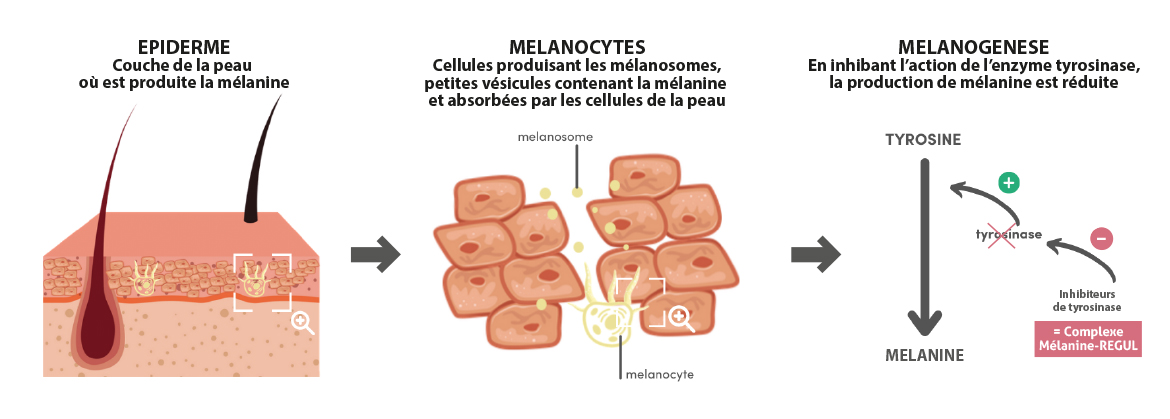
The Melanin-REGUL complex is a synergistic formula of premium quality plant extracts. It naturally helps to correct hyperpigmentation and regulate melanin production by combining the power of grape seed polyphenols, grape viniferin, licorice extract, and vitamin C for an overall brightening effect on the complexion.
Its mechanism of action consists of blocking the conversion of tyrosine into melanin by inhibiting a specific enzyme, tyrosinase.
The patented Melanin-REGUL complex is composed of four powerful ingredients that work synergistically to regulate melanin production: taken together, their action inhibits 85% of the tyrosinase enzyme responsible for melanin production.
2.1. VINIFERIN
Viniferine is a polyphenol found in grapes and wine. It belongs to the flavonoid family, which are plant compounds with antioxidant properties. Viniferine has been studied for its potential benefits for the skin, particularly due to its antioxidant properties and its action on skin pigmentation.
It is largely responsible for inhibiting tyrosinase, a key enzyme involved in melanin production. By reducing tyrosinase activity, viniferin can help reduce hyperpigmentation and even out skin tone.
We have selected a viniferin derived from grape marc extract sourced in France.
2.2. GRAPE SEED POLYPHENOLS
Grape seed polyphenols are natural compounds found in grape seeds and, in particular, in grape seed extracts. They belong to the polyphenol family, which are antioxidants found in many plant-based foods. Grape seed polyphenols have been studied for their various health benefits, including for the skin.
Certain grape seed polyphenols, particularly proanthocyanidins, have been shown to have photoprotective properties. They can help protect the skin from damage caused by the sun's ultraviolet (UV) rays.
Grape seed polyphenols can help inhibit melanin production, thereby helping to reduce hyperpigmentation and even out skin tone.
We have selected polyphenols from grape seeds sourced in France, in the Champagne region.
2.3. LICORICE EXTRACT
Licorice extract is derived from the Glycyrrhiza glabra plant, which is native to the Mediterranean region and Asia. This extract has long been used in traditional medicine for its medicinal properties. When it comes to the skin, licorice extract is valued for several potential benefits.
Licorice extract contains compounds, such as glycyrrhizin and liquiritin, which have anti-inflammatory properties. This can help soothe irritated, red, or inflamed skin.
The antioxidant compounds present in licorice extract can help neutralize free radicals, thereby helping to prevent oxidative damage to the skin. This damage is often linked to premature skin aging.
Licorice extract may help reduce hyperpigmentation by inhibiting melanin production. This can be useful in reducing the appearance of dark spots, acne scars, and other pigment irregularities.
Some skin care products containing licorice extract may have moisturizing properties, helping to maintain skin suppleness.
Thanks to its anti-inflammatory properties, licorice extract can help reduce the appearance of redness and skin irritation.
Finally, studies suggest that glycyrrhizin in licorice extract may have a protective effect against damage caused by the sun's ultraviolet (UV) rays.
2.4. VITAMIN C
A VITAMIN THAT COMBATS CELLULAR AGING LINKED TO OXIDATIVE STRESS
It also plays an important role in metabolism and normal functioning through various biochemical reactions in the body. This includes collagen synthesis!
Vitamin C (or ascorbic acid) is a major vitamin found in fruits and vegetables. Our bodies cannot synthesize it, and food is the only way to obtain the necessary and sufficient amount. It is sensitive to cooking and air. It is therefore important to consume fresh fruits and vegetables quickly to retain all their vitamin C.
Its main benefits include reducing fatigue, fighting oxidation and cellular aging, and strengthening the immune system.
We have selected an organic acerola powder, a fruit that is particularly rich in natural vitamin C.
Its main functions are:
- Contribution to the protection of cells against oxidative stress.
 Free delivery
For orders over €90
Free delivery
For orders over €90
 Secure payment
Visa, Mastercard, Paypal, ApplePay
Secure payment
Visa, Mastercard, Paypal, ApplePay
 Do you have a question?
We're here for you
Do you have a question?
We're here for you